

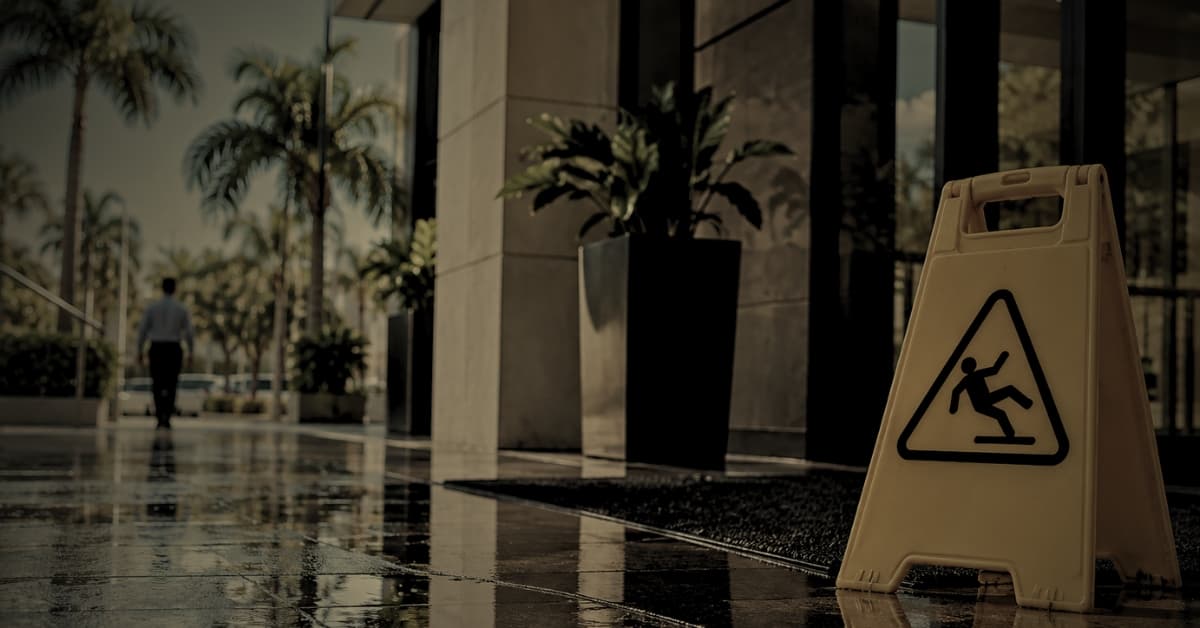
Premises liability Florida law governs an owner’s responsibility for injuries that occur on their property — and most people don’t think about it until something goes wrong. A shopper slips near a freezer case, a guest falls on a broken step at a rental property, or a tenant is assaulted in a poorly lit parking area. In each situation, the injured person is left with medical bills, time away from work, and a reasonable question about whether the property owner bears some responsibility for what happened.
Florida law answers that question through premises liability, the body of law governing an owner’s responsibility for injuries that occur on its property. The answer is rarely automatic. It generally depends on why the injured person was there, what the owner knew or should have known about the danger, and how the injured person’s own conduct is viewed. This article explains how these claims generally work in Florida, the compensation that may be available, and when it makes sense to speak with an attorney.
Understanding Premises Liability in Florida
Premises liability is a form of negligence. An injured person generally must show that the owner or party in control of the property owed a duty of care, that it breached that duty by failing to address or warn of a dangerous condition, and that the breach caused the injury and resulting damages. The responsible party is not always the titled owner. A tenant operating a business, a property manager, a maintenance contractor, or an association that controls common areas may also bear responsibility, depending on who controlled the area where the injury occurred.
A property owner is not, however, an insurer of everyone who comes onto the property, and an injury there does not by itself establish that the owner did anything wrong. The law generally asks whether the owner acted reasonably, and much of a premises case turns on proving what the owner knew, when it knew it, and what it did about it.
Key Responsibilities of Property Owners
Duty of Care Explained
For visitors lawfully on the property for a purpose connected to the owner’s business, Florida law generally imposes two related duties: to use reasonable care to maintain the premises in a reasonably safe condition, and to warn of concealed dangers that the owner knew or should have known about and that the visitor could not discover through due care. These duties are distinct, so a warning sign may satisfy the duty to warn without necessarily resolving whether the owner should have corrected the condition.
Reasonable care depends on the circumstances. A grocery store that handles liquids and produce all day may be expected to inspect its aisles more often than an office lobby, and courts and juries generally look at the nature of the business, the foreseeability of the hazard, and whether the owner’s inspection and maintenance practices were actually followed on the day of the injury.
Types of Visitors and Their Rights
The duty owed depends heavily on the visitor’s status. An invitee is someone on the property by express or implied invitation, typically for a business purpose, such as a customer in a store or a guest at a hotel. Florida law also generally treats invited social guests as invitees. Invitees receive the highest level of protection, including the duties to maintain the property and to warn described above.
A person who enters for his or her own convenience or purposes, without an invitation, is generally treated as an uninvited licensee and receives less protection. The owner’s duty toward an uninvited licensee is generally limited to refraining from willful or wanton misconduct and warning of known dangers that are not open to ordinary observation.
Trespassers receive the least protection, and Florida’s statute on this point is fairly specific. The owner generally owes an undiscovered trespasser only the duty to refrain from intentional misconduct. Toward a trespasser whose presence has been detected, the owner generally must also refrain from gross negligence and warn of known dangerous conditions that are not readily observable. Florida law also gives owners immunity in certain situations involving intoxicated trespassers or trespassers committing a felony on the property. Children may be treated differently under the attractive nuisance doctrine.
Common Types of Premises Liability Cases
Premises claims also arise from falling merchandise, defective elevators and escalators, swimming pools, and poorly maintained stairs and balconies, but two categories account for a large share of these cases.
Slip and Fall Accidents
Slip and fall and trip and fall claims are the most familiar premises cases, commonly involving spills, tracked-in rainwater, loose mats, uneven flooring, broken stairs and handrails, and inadequate lighting. Florida has a specific rule for one category of these claims. Where a person slips on a transitory foreign substance in a business establishment, such as a spill on a store floor, the injured person generally must prove that the business had actual or constructive knowledge of the dangerous condition and should have taken action to remedy it. Constructive knowledge may be shown with circumstantial evidence that the condition existed long enough that the business should have discovered it through ordinary care, or that the condition occurred with regularity and was therefore foreseeable.
That rule makes evidence about time critical. A spill that genuinely existed may not support a claim if nothing shows how long it was on the floor. Surveillance video, inspection logs, and employee testimony often decide whether that burden can be met, and much of that evidence is overwritten or discarded on a routine schedule unless someone asks that it be preserved.
Negligent Security in Florida
Negligent security claims arise when a person is injured by the criminal act of a third party, such as an assault or robbery, on property where the owner allegedly failed to provide reasonable security. Apartment complexes, parking garages, hotels, and shopping centers are common settings. The central question is generally foreseeability: whether the owner knew or should have known of a risk of criminal activity, often based on prior similar incidents on or near the property, and whether reasonable measures such as lighting, functioning locks, cameras, or security personnel would likely have prevented the harm.
Florida’s legislative changes in this area have generally favored property owners. In these cases the jury generally must consider the fault of everyone who contributed to the injury, including the person who committed the crime, which can substantially reduce the share of damages attributed to the owner. Florida law also creates a presumption against liability for owners of certain multifamily residential properties that substantially implement specified security measures, such as cameras at entry points, parking lot lighting, deadbolts and window locks, a crime prevention assessment, and employee training. Because the owner bears the burden of proving substantial implementation, the property’s security records and practices often become a focus of the case.
Legal Process and Your Rights
Steps to Take After an Injury
What happens in the first days after an injury often shapes everything that follows. If you are able, report the incident to the owner or manager before leaving and ask for a copy of any incident report. Photograph the condition that caused the injury, the surrounding area, any warning signs or their absence, and your footwear, and obtain the names and contact information of witnesses. Seek medical attention promptly, even if the injury seems minor, and follow through on treatment, because gaps in care give an insurer room to argue that the injury was not serious or came from somewhere else.
It is also wise to be careful about what you say. The property owner’s insurer may ask for a recorded statement soon after the incident, and there is generally no obligation to give one. Social media posts can also be used to challenge your account. Finally, keep the deadline in mind. Under current Florida law, a negligence action generally must be filed within two years, claims involving government-owned property carry separate notice requirements and deadlines, and reporting a claim to an insurer does not generally stop the clock.
Choosing the Right Florida Premises Liability Attorney
A Florida premises liability attorney should be familiar with the knowledge requirements that apply to slip and fall claims, the comparative fault rules discussed below, and the evidence issues that decide most premises cases. It is reasonable to ask how the attorney investigates liability, how quickly preservation requests are sent, whether the attorney has handled cases involving similar properties and injuries, and how the fee arrangement works. Many personal injury attorneys offer free initial consultations and handle these matters on a contingency fee basis.
Compensation You May Be Entitled To
The damages available in a premises case are generally intended to compensate for the losses the injury caused, but the amount actually recovered also depends on how fault is allocated. Florida follows a modified comparative negligence approach in most negligence actions. If the injured person is found partly responsible, for example for ignoring a warning or not watching where he or she was walking, the recovery is generally reduced by that percentage, and an injured person found more than fifty percent at fault generally cannot recover damages at all. That rule gives property owners and their insurers a strong incentive to argue that the hazard was open and obvious or that the visitor was distracted.
Medical Expenses and Lost Wages
Economic damages generally include past and future medical expenses, lost wages, and, where the injury affects the ability to work going forward, a loss of future earning capacity. These damages must be documented, and future losses may require testimony from treating physicians or other professionals. Florida law has also tightened the rules governing how medical expenses are proven in personal injury cases, including limits on the use of billed amounts and disclosure requirements for treatment provided under a letter of protection, so the way treatment is obtained and paid for can affect how these damages are presented.
Pain and Suffering Damages
Non-economic damages compensate for physical pain, mental anguish, inconvenience, disfigurement, and a diminished ability to enjoy life. In a serious injury claim they are often the largest component of the recovery, and also the most contested. Their value generally depends on the severity and permanence of the injury, how consistently it has been treated and documented, and how credibly its effect on daily life can be described. A fracture that heals fully in a few months is viewed very differently from an injury that permanently limits mobility.
When to Contact a Florida Accident Attorney
Signs You Need Legal Representation
Not every minor fall requires a lawyer, but certain circumstances generally call for one. These include an injury requiring surgery, hospitalization, or extended treatment; an injury that keeps you out of work; an owner or insurer that disputes responsibility or suggests you were at fault; an injury caused by a criminal act on the property; an incident on government property; and an early settlement offer that arrives before your treatment is complete. Situations involving more than one potentially responsible party also benefit from early legal review.
How a South Florida Premises Liability Lawyer Can Help
A South Florida premises liability lawyer’s most valuable work often happens early. That work includes sending preservation letters before video is overwritten, obtaining inspection and maintenance records, identifying every party that may share responsibility, locating the available insurance coverage, and retaining experts where the condition of the property or the adequacy of its security is disputed. Counsel can also handle communications with insurers and medical liens, time a settlement demand so that it reflects the full extent of the injury, and file suit where a fair resolution is not offered.
Conclusion
Premises liability claims in Florida turn on the details: the visitor’s status, what the owner knew or should have known, the evidence available to prove it, and how fault is shared. Property owners have meaningful obligations to keep their premises reasonably safe, but the burden of proving that those obligations were not met generally falls on the injured person, and the evidence needed to do so can disappear quickly.
If you or a family member has been injured on someone else’s property, the attorneys at The Hernandez Legal Group are available to review the circumstances, explain how Florida law applies to your situation, and pursue the compensation you may be entitled to recover.
This article is for general informational purposes only and does not constitute legal advice. Premises liability claims in Florida are fact specific, and the duties owed, the evidence required, the effect of comparative fault, the damages available, and the applicable deadlines may differ depending on your circumstances and the law in effect at the relevant time. If you have been injured on someone else’s property, you should consult directly with a Florida attorney who can review the facts and advise you.
© 2026 The Hernandez Legal Group wrote and published this article. All rights reserved.