
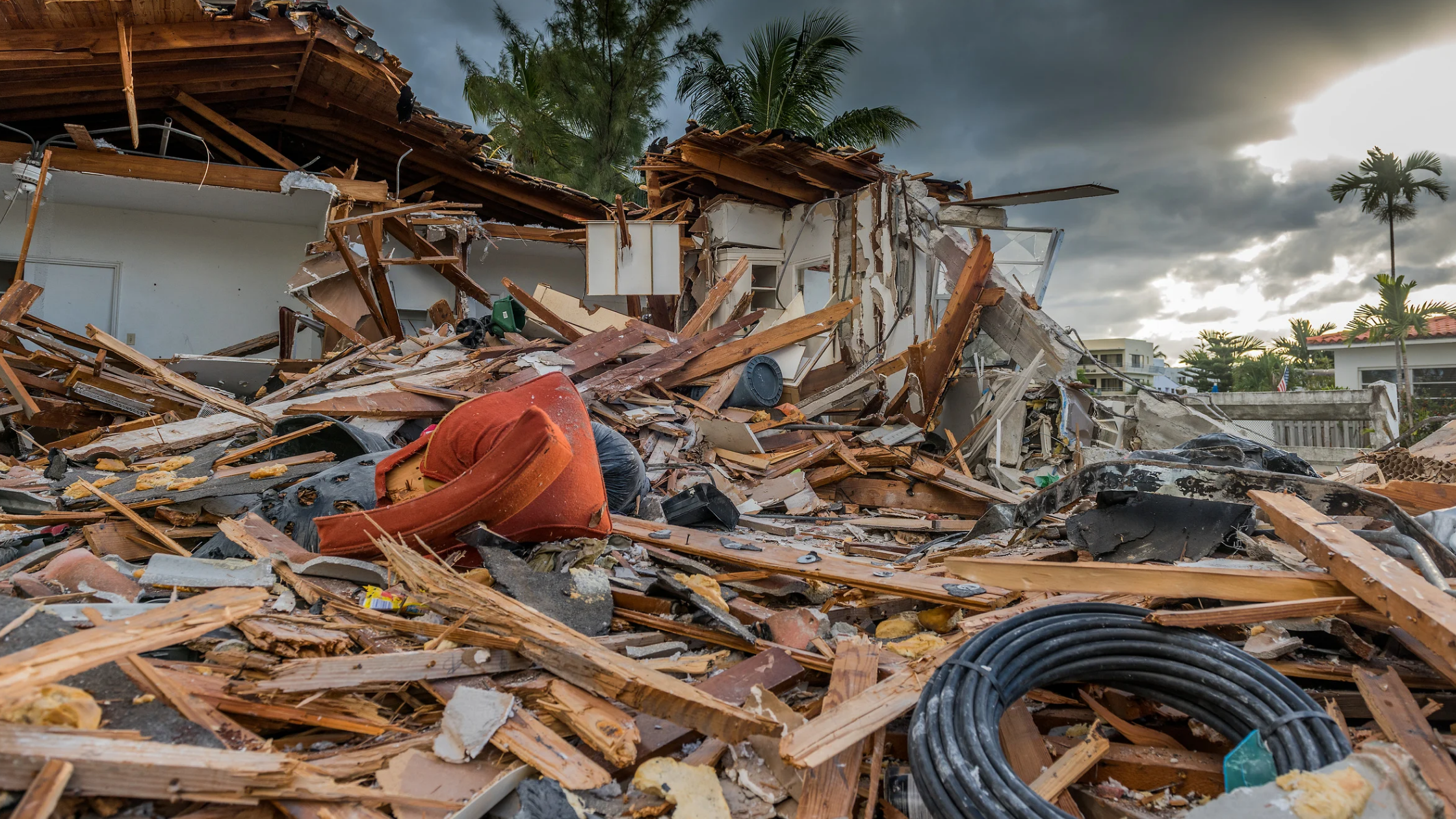
When a hurricane hits Florida, the damage to homes and businesses can feel overwhelming. Insurance should provide financial protection, but the claim process is often adversarial and deadline driven. Dense policy language and changing Florida statutes make it harder. A property damage attorney does far more than file paperwork. The right lawyer helps you document every loss, identify the correct coverage, and meet strict notice and lawsuit deadlines. They also push the insurance company to pay what the policy actually promises.
Understanding Hurricane Damage
Types of Hurricane Damage
Hurricanes are not a single type of loss. A single storm can bring extreme wind, wind-driven rain, storm surge, rising surface water, tornadoes, and long power outages. Each of these can affect different parts of your property and may fall under different parts of your insurance policy, or in the case of flood, under a completely separate policy.
Wind Damage
Wind is usually the core covered peril in a Florida homeowners or commercial property policy. Strong hurricane winds can rip off roof coverings and damage roof decking. They can also snap rafters or trusses, break windows and doors, and tear away exterior cladding or balcony railings. Many modern Florida structures follow the Florida Building Code. In Miami-Dade and Broward Counties, they must also follow the High Velocity Hurricane Zone provisions. These rules require stronger roof attachments and impact-rated glass or shutters. They also require higher wind load standards. These upgrades reduce hurricane damage, but they do not eliminate it.
A lawyer who understands both building science and insurance will know how to connect visible problems, such as missing tiles or leaks, to less obvious wind damage, such as shifted trusses, fastener uplift, or compromised waterproofing, and will work with engineers or contractors to prove that those conditions are storm related rather than “wear and tear.”
Flood Damage
Flood damage is different. Rising water from storm surge, overflowing canals, or heavy rain that saturates the ground and enters from the surface is treated as “flood” rather than “wind-driven rain” in most insurance contracts. Standard homeowners and renters policies generally do not cover flood damage at all. Flood coverage usually comes from a separate flood policy, commonly through the National Flood Insurance Program or a private flood insurer.
This split between wind and flood coverage is crucial in the State of Florida, where a property can experience both powerful winds and significant storm surge in the same event. Disputes often arise over whether damage was caused by covered wind or excluded flood. An experienced attorney will focus early on evidence that separates wind-caused damage from later rising water.
Structural Damage
Some hurricane damage is immediately visible; other damage is hidden in the structure. High winds can shift load paths, loosen structural connectors, and subtly rack walls or columns. Water intrusion can weaken framing, cause corrosion, or damage concrete and reinforcing steel over time, especially in coastal structures exposed to salt air. A thorough structural evaluation is often necessary in Florida high-rise buildings and older coastal homes, both to protect safety and to support claims for full repairs that meet current Florida Building Code standards rather than temporary patchwork.
Impact of Hurricane Damage on Properties in Florida
Properties in some of Florida’s most burgeoning cities present unique challenges: high-rise condominiums with shared roofs and exterior walls, mixed-use towers, older single-family homes built under pre-Hurricane Andrew codes, and newer construction designed under stricter post-2002 requirements. The Florida Building Code incorporates specialized rules for High Velocity Hurricane Zones that apply in, among others, Miami-Dade County, which can affect how repairs must be performed and what “code upgrade” coverage may owe.
A Florida attorney who practices first party insurance and specializes in property damage claims will understand how building code compliance, association documents, and city or county permitting practices interact with insurance coverage and claim valuation.
The Role of a Hurricane Property Damage Attorney in Florida
Assessing Damage and Losses
A property damage attorney begins by treating your property like a project, not just a claim file. That often includes:
- Coordinating inspections by qualified contractors, engineers, or roof consultants
- Identifying hidden water intrusion, mold risk, and structural concerns
- Evaluating personal property losses and additional living expenses or business interruption
This early assessment is critical because Florida law now imposes strict time limits on giving notice of a property insurance claim and any supplemental or reopened claims. Florida Statutes section 627.70132 generally requires notice of a new or reopened property claim within one year of the date of loss and notice of a supplemental claim within eighteen months, with some nuances based on when the policy was issued.
Navigating Insurance Policies
Insurance policies are dense contracts with many exclusions, limitations, and special hurricane provisions. In Florida, policies often include:
- A separate hurricane deductible calculated as a percentage of the dwelling or building limit
- Anti-concurrent causation clauses that try to limit coverage when both wind and flood contribute to loss
- Special provisions for actual cash value and replacement cost, including when full replacement cost is paid and whether code upgrades are covered.
A Florida attorney will read every endorsement, compare your policy to the loss facts, and identify which portions of the damage are potentially covered, excluded, or arguable. That interpretation guides how the claim is presented from day one.
Fighting for Your Rights
Florida statutes now regulate many aspects of property insurance claims, from deadlines to insurer conduct and presuit procedures. For example:
- Florida Statutes section 627.70132 sets the one-year and eighteen-month notice deadlines for property insurance claims and supplemental claims.
- Florida Statutes section 627.70131 imposes duties on insurers to promptly acknowledge communications, investigate, and either pay or deny claims within defined time frames.
- Florida Statutes section 627.70152 requires a presuit notice of intent to initiate litigation in many property insurance disputes and briefly tolls the statute of limitations while the notice is pending.
A skilled attorney keeps your claim on the right side of these rules, uses them to challenge delay or underpayment, and, when necessary, prepares the case for appraisal, mediation, or litigation.
Evaluating Wind Damage Claims
Wind damage claims (including hurricane claims) often turn on details. Insurers may argue that roof damage is cosmetic, that leaks are due to age, wear and tear, or deterioration, or that interior water came through preexisting openings. An experienced Florida attorney will:
- Compare pre-storm and post-storm conditions through photos, maintenance records, and inspection reports,
- Work with experts who understand how hurricane winds affect roofs, windows, and building envelopes,
- Tie interior damage to specific openings or failures caused by wind during the storm, rather than generalized moisture or long-term wear,
This level of detail is especially important in South Florida, where building code standards, high-rise exposure, and coastal weather can make it harder to separate storm damage from ordinary deterioration.
Dealing with Insurance Denials
Insurers may deny or limit wind claims by alleging late notice, lack of storm causation, pre-existing damage, or failure to mitigate after the storm. Florida law allows insurers to raise these defenses, but it also imposes duties of good faith claim handling. A denial letter is not the end of the claim; it is often just the beginning of a more focused dispute.
When a denial or underpayment letter arrives, a Florida attorney will typically start by comparing the carrier’s stated reasons to the actual policy language, the inspection history, and your own documentation. Many letters rely on generic “wear and tear” or “no storm-created opening” language that does not line up with photographs, contractor reports, or weather data for the date of loss. Your lawyer can prepare a detailed response that corrects misstatements of fact, points out policy provisions that favor coverage, and highlights any legal standards the insurer has ignored or misapplied. That type of record is often critical to undermining the carrier’s arguments.
In many hurricane cases, an attorney will also explore alternatives to immediate litigation that still put pressure on the insurer. For example, if the dispute is primarily about the amount of loss rather than outright coverage, the policy may allow the insured to demand appraisal, which brings in appraisers and, potentially, an umpire to set the value. These tools do not replace the right to sue, but they can generate additional offers, clarify the issues, and create a more favorable paper trail if a lawsuit ultimately becomes necessary.
Maximizing Your Settlement
Documenting the Full Scope of Damage
Maximizing a hurricane settlement is not just about asking for more. It begins with a thorough effort to document all damage and the real cost to restore the property to its pre-loss condition. Repairs must also meet current Florida Building Code requirements. This process requires looking beyond obvious issues like broken tiles or water stains. It also includes code upgrades, hidden structural damage, envelope problems, and losses to personal property or business income. In Miami and across Florida, code changes after major storms often require stronger roofing systems, upgraded fasteners, or improved openings. These added costs can be significant. A lawyer who understands replacement cost provisions and the building code can make sure these items are included and not overlooked.
Using Code Requirements and Hidden Damage to Support Your Claim
Hurricane claims often change over time. Hidden damage may appear once repairs begin, or contractors may uncover conditions not visible during the first inspection. Florida Statutes section 627.70132 requires reporting an initial or reopened claim within one year of the loss. It also requires reporting any supplemental claim within eighteen months. An attorney focused on full recovery keeps these deadlines in mind. They work with you and your contractors to identify new covered damage as it appears and to submit supplemental claims on time. This approach protects your right to seek more funds and prevents the insurer from using the statute to block additional payments.
Meeting Notice Deadlines and Filing Supplemental Claims
Throughout this process, the case should be prepared as if it may reach court. This does not mean every claim will go to trial. It means estimates, photos, expert opinions, and correspondence must be organized for a judge or jury. This preparation often leads to more realistic settlement offers. Insurers respond differently when they see a policyholder ready to prove the claim. If negotiations fail, a lawsuit may become necessary. Florida Statutes section 95.11(2)(e) gives you five years from the loss to file a breach of contract action. This deadline applies only if the initial and supplemental claims were reported within the one-year and eighteen-month limits in section 627.70132. You must also follow any required presuit procedures. An attorney who tracks both sets of deadlines can build a strategy that maximizes recovery and protects your rights.
This article is for general information only and is not legal advice. Every case turns on its facts and the precise language of the governing statutes and rules. If you need legal advice about a potential property damage claim in Florida, consult an experienced Florida attorney.
©2025 The Hernandez Legal Group wrote and published this article. All rights reserved. this article. All rights reserved.