

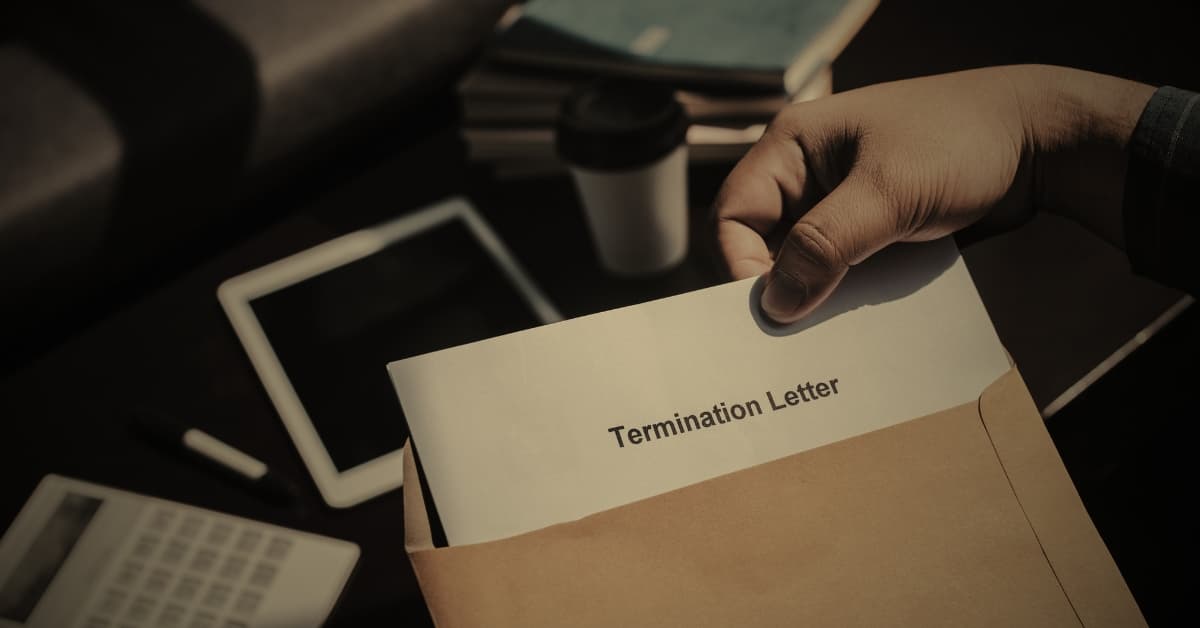
Understanding Wrongful Termination in Florida
Losing a job is stressful enough without the nagging sense that something about the firing was not right. In Florida, wrongful termination is more common than many workers realize, and that instinct deserves a closer look. The line between a lawful termination and an unlawful one is not always obvious. Florida is an at-will employment state, which means an employer can generally end the employment relationship at any time, for almost any reason, or for no reason at all. By the same token, an employee is free to quit at any time. That broad rule leads many workers to assume they have no recourse no matter how their employment ends. That assumption is wrong.
At-will employment is the default, but it is not absolute. State and federal law carve out important exceptions, and when a termination falls inside one of those exceptions, it crosses the line from a permissible business decision into wrongful termination. An employer cannot fire you for a reason the law specifically prohibits, cannot retaliate against you for exercising a protected right, and cannot ignore a binding promise it made about how and when you could be let go. The difficulty is that employers rarely announce an illegal motive. They offer a neutral explanation, and it falls to the employee to recognize the warning signs and connect them to the real reason. The five signs below are the ones you should not ignore.
Sign 1: Wrongful Termination Based on Discrimination
The clearest form of wrongful termination is a firing driven by discrimination. Both Florida and federal law prohibit employers from making employment decisions based on certain protected characteristics. Under the Florida Civil Rights Act and parallel federal statutes, an employer cannot terminate an employee because of a protected characteristic, including race, color, religion, sex (including sexual orientation and gender identity), pregnancy, national origin, age, disability, or marital status. Age discrimination under federal law generally protects employees who are 40 or older. These categories are commonly described as protected classes, and a termination motivated by any of them is unlawful no matter how the employer dresses it up.
Discrimination is seldom stated out loud. It surfaces in the pattern around the firing. A worker who receives strong performance reviews for years and is then abruptly let go shortly after announcing a pregnancy, requesting a religious accommodation, or disclosing a medical condition has reason to question the timing. So does an older employee who is replaced by someone significantly younger and less experienced while being told the position was eliminated. Comments from supervisors about an employee’s age, accent, family plans, or need for accommodation can also reveal a motive the official paperwork hides. When a stated reason for termination does not match the employee’s actual record, that gap is often where discrimination lives. The law does not require a confession. It allows the surrounding facts to tell the story.
Sign 2: Wrongful Termination for Retaliation
Retaliation is one of the most common forms of wrongful termination, and one of the most overlooked. The law protects employees who report illegal conduct, refuse to participate in it, or cooperate with an investigation into it. Florida law provides protections for many employees who object to, report, or refuse to participate in conduct they reasonably believe violates the law, and federal law adds further protection for employees who report a range of legal violations. When an employer responds to that kind of protected report by firing the employee, the termination is retaliatory and unlawful.
Retaliation tends to follow a recognizable sequence. An employee raises a concern about wage violations, fraud, safety problems, or unlawful conduct, and within a short window the employer’s attitude shifts. The worker who was a valued contributor suddenly receives criticism, is excluded from meetings, is reassigned to less desirable duties, or is written up for conduct that previously drew no attention. Then the termination arrives, framed as performance or restructuring. The closer in time the firing is to the protected complaint, the stronger the inference that the complaint is the real cause. Timing alone does not prove a case, but a sharp reversal in how an employee is treated immediately after a report is a signal worth taking seriously.
Sign 3: Your Firing Broke a Promise the Employer Made
At-will employment can be modified by agreement. When an employer and employee enter into a contract that governs the terms of the relationship, that contract can limit the employer’s ability to fire at will. Some employees have written employment agreements that specify a fixed term, require good cause for termination, or set out a specific process the employer must follow before letting someone go. A termination that ignores those terms is not just unfair. It is a breach of contract, and it gives the employee a claim the at-will rule would otherwise foreclose.
Contractual protections are not always found in a single document labeled as a contract. They can appear in an employment agreement, offer letter, collective bargaining agreement, severance agreement, or, in limited circumstances, other employer documents that create enforceable contractual obligations. The first thing to do when a termination feels wrong is to gather every document that describes the terms of your employment and read what it actually says about discipline, notice, severance, and the grounds for dismissal. If the employer promised a progressive discipline process and skipped it, or guaranteed employment for a defined period and cut it short, the written terms may give you leverage that has nothing to do with discrimination or retaliation. The promise itself is the protection.
Sign 4: You Were Fired After Reporting Harassment or Unsafe Conditions
Employees have the right to a workplace free from unlawful harassment and serious safety hazards, and the law protects them when they speak up about either. Reporting sexual harassment, a hostile work environment, or dangerous working conditions is protected activity, and many reports concerning workplace safety and health conditions are protected under federal and state law. An employer that fires a worker for raising those concerns, rather than addressing the underlying problem, has turned a legitimate complaint into the basis for an unlawful termination.
Employers carry real obligations here. They are expected to maintain a safe workplace and to take complaints of harassment seriously rather than punishing the person who comes forward. When an employee reports that a supervisor is behaving inappropriately, or that equipment, conditions, or practices put workers at risk, the lawful response is to investigate and correct the problem. Firing the messenger is not a correction. It is retaliation, and it exposes the employer to liability. The warning sign is the same pattern that defines retaliation generally. An employee in good standing reports harassment or a safety hazard, and the consequence falls on the person who reported rather than on the conduct that was reported. If your termination followed a complaint about how you or your coworkers were being treated, the sequence deserves scrutiny.
A related set of protections applies to medical and family leave. The federal Family and Medical Leave Act (FMLA) allows eligible employees to take job-protected leave for qualifying medical and family reasons, and an employer generally cannot fire a worker for requesting FMLA leave, taking it, or returning from it. When a termination follows closely on the heels of an employee asking for or using protected leave, the same retaliation warning signs apply, and the timing deserves a careful look.
Sign 5: The Termination Came Suddenly and Without Explanation
Not every wrongful termination announces itself through an obvious protected category. Sometimes the clearest sign is the way the firing happens. A termination that arrives abruptly, departs from the employer’s usual procedures, or comes with a shifting or hollow explanation can indicate that the stated reason is a cover for the real one. When an employer cannot give a consistent account of why an employee was let go, or when the reason changes each time it is questioned, the inconsistency itself is meaningful.
Unusual termination processes are worth noting. If an employer skips the documentation, warnings, or review steps it normally follows, rushes a long-tenured employee out the door, or refuses to put the reason for termination in writing, those departures from routine can corroborate that something improper drove the decision. This is also where documentation becomes decisive. Employees who keep their own records of performance reviews, commendations, emails, and the events leading up to a firing are in a far stronger position than those who rely on memory. A consistent record of good performance set against a sudden, poorly explained termination is exactly the kind of contrast that supports a wrongful termination claim. The goal is not to assume bad faith in every firing, but to recognize when the manner of the termination does not add up.
What to Do if You Suspect Wrongful Termination
If your termination shows one or more of these signs, the steps you take in the days that follow matter. Start by preserving everything. Save copies of your employment agreement, offer letter, handbook, performance reviews, and any emails or messages that relate to your work and your firing, because access to company systems often disappears the moment employment ends. Write down a clear timeline while the details are fresh, including who said what and when, and the sequence of events leading up to the termination. Avoid signing a severance agreement or release on the spot. Those documents frequently ask you to give up the right to bring a claim in exchange for a payment, and once signed they are difficult to undo.
Be mindful of deadlines. Wrongful termination claims are governed by strict filing periods, and some require you to file a charge with an administrative agency before you can pursue the matter further. Waiting too long can extinguish an otherwise strong claim regardless of its merits. Because the deadlines vary depending on the type of claim and the law involved, the safest course is to have your situation evaluated promptly rather than assuming you have ample time.
Finally, talk to a lawyer who handles employment matters in Florida before you draw any conclusions about your options. Many terminations that feel unfair are nonetheless lawful under the at-will rule, and many that look routine on the surface turn out to involve discrimination, retaliation, or a breach of contract once the facts are examined. An attorney can tell the difference, assess the strength of your claim, and advise you on the right path forward before a deadline passes or a signature forecloses your rights.
Protecting Your Rights After a Wrongful Termination
At-will employment gives Florida employers wide latitude, but it does not give them permission to break the law. A firing rooted in discrimination, retaliation for protected reporting, a breach of an employment contract, or a response to a harassment or safety complaint is not a lawful exercise of that latitude. It is wrongful termination, and the law provides a remedy. The challenge for any employee is recognizing the signs early enough to act on them, because the evidence that proves these cases is easiest to gather in the period right after the termination occurs.
If you believe you were fired for an unlawful reason, or you are unsure whether your termination crossed the line, the attorneys at Hernandez Legal Group are available to review the circumstances and help you understand your rights under Florida and federal law.
This article is for general informational purposes only and is not legal advice. Every employment situation depends on its specific facts, the terms of any applicable agreement, and the provisions of state and federal law that govern it. If you have questions about a termination or your rights as an employee in Florida, you should consult directly with a Florida attorney who can evaluate your circumstances and provide advice tailored to your situation.
© 2026 The Hernandez Legal Group wrote and published this article. All rights reserved.